Monthly Archives: June 2016

Mallaig to Inverie, Knoydart Peninsular

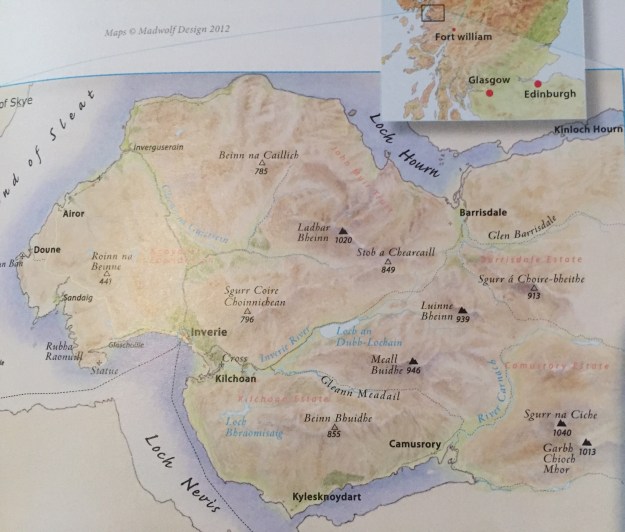
The Knoydart peninsular came highly recommended by Joanna & Dan who’d camped there 3 years earlier. It is on the mainland but cut off from the rest of Scotland by a range of high mountains and only accessible by boat or hiking over a mountain pass.
IMG_1762

Joanna had seen a basking shark from the ferry on the way to Inverie 3 years earlier, so Rosamund (below) was on the lookout during our whole passage from Mallaig to Inverie, sadly without success.

IMG_1742 Ros looking for basking sharks.

We picked up a “The Old Forge” mooring and later ate at the restaurant. After mooring we noticed a large boat drawing up to the pier – then a piper welcomed them ashore. But not many went ashore. Rosamund later learned from two Germany people she met that the boat “Lord of the Glens” was full of German tourist and they had started in Inverness for a cruise along the Caledonian Canal through Loch Ness to the Hebridean Islands of Mull, Skye, Iona and Eigg. They advertised a drink at the most remote pub in the British Isles at Inverie before crossing the sea to Skye and the picturesque town of Portree – that pub was of course “The Old Forge”.
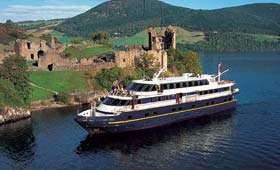
LordOfTheGlens The Lord of the Glens.

The Knoydart Foundation was established in 1997 to work on behalf of the community. The Foundation took over the management of 17,200 acres of peninsular land in 1999. They are now a charity with responsibilities including housing, a hydroelectric system, the visitor service, and the land/wild life habitat management. They also provide a ranger service. Knoydart is not connected to the national power grid and now has an independent green electricity supply serving all the properties in Inverie. Knoydart Renewables Ltd (a trading subsidiary of the Knoydart Foundation) is responsible for the hydro electric system fed by Loch Bhraomisaig on the slopes of Beinn Buidhe.

SONY DSC

The totem pole carved and erected by the local school children to reflect the history of Knoydart

On returning to Inverie the following morning, I had post cards to post at the Post Office (see below) – election day Thursday 23rd June was the next day and I could not tell how they would vote as there was a “Vote Remain” poster in the Post Office window but a “Vote Leave” poster in the window of a car drawn up outside. But I also had strict instructions to get some venison steaks from the local shop when it opened at 10am for us to enjoy that night – hopefully to enjoy the results as they came in and for Britain to remain in the EU.

IMG_1760 Vote remain in the post office window and vote leave in the car window.
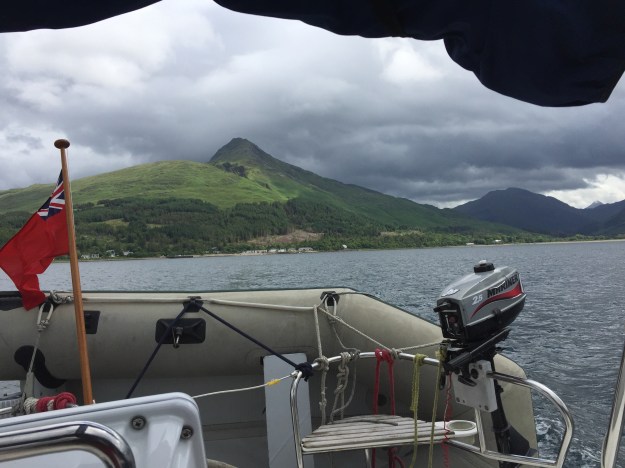
IMG_1781Leaving the magnificent vista of the Knoydart Peninsular
Arisaig to Mallaig

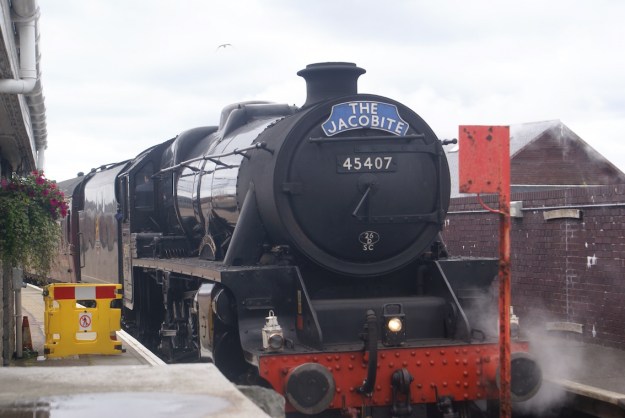
Although we’d received negative comments from fellow sailors about Mallaig, we found it delightful. It was a working fishing town much like Newgale in southern Cornwall, but much more accepting of sailors now the new EU funded marina has opened just north of the harbour. A new continental looking shower facility had been opened only 9 weeks before, with a bakery next door and a teepee shaped Pizza hut, which opened from Friday to Sunday. There were numerous fish restaurants and cafés….and a train station with a good connection to Fortwilliam and Glasgow, but more romantically Mallaig is  the final destination for The Jacobite, the famous steam train that featured as the Hogwart’s Express in “Harry Potter and the Philosopher’s Stone”.

The voyage to Mallaig was cold, wet and windy, so we set the jib with light motor and soon knocked off the 11nm. There is a traffic light system to get into the harbour to regulate and give priority to the frequent Caledonian MacBrayne ferry connections.     The winds by the time we arrived were gusting force 6, yet the marina was very sheltered and we hardly noticed – quite a contrast from Arisaig, so we started planning our next two days. I was keen to travel on  the Hogwart Express and Ros was keen to visit Knoydart so this set the scene.

SONY DSC

West Coast Railways, operators of “The Jacobite” provided the steam engine and the carriages for the “Hogwarts Express”.

The leaflets claim that The Hogwart Express round trip of 84 miles is the greatest railway journey in the world. It was stunning with magnificent scenes over Arisaig and Loch nan Ceall where we’d moored earlier, past the expansive beaches of Morar where Joanna & Dan had a rendez-vous with Andrew and family three years earlier.  And the highlight – passing over the Glenfinnan viaduct which featured in our Warner Brother studio tour of the Harry Potter set at Leavesdon  with Hugh and Percy two years ago. We had been filmed and photographed flying over the same train and reservoir in Harry’s father’s old Ford Anglia. As we approached Fortwilliam, we got a glimpse of the famous Staircase Lock system on the Calidonean canal – a preview of our impending trip in September when we plan to sail across to the East Coast.

SONY DSC

Morar Beach

SONY DSC

Glenfinnan viaduct

WarnerBrosWhen we flew over 2 years earlier with Hugh & Percy!

We had 18 minutes to buy tickets and catch the conventional train back to Mallaig, so we did not have time to look around Fortwilliam, but we could see the promise of this, and climbing Ben Nevis, shrouded in cloud nearby, for when we return in September. Interestingly the diesel train slowed down on the viaduct on the way back to allow passengers plenty of time to take photographs.

On our return to Mallaig we went straight to the Cornerstone Restaurant renowned for its very fresh seafood.

IMG_1734Starters at the Cornerstone Restaurant in Mallaig
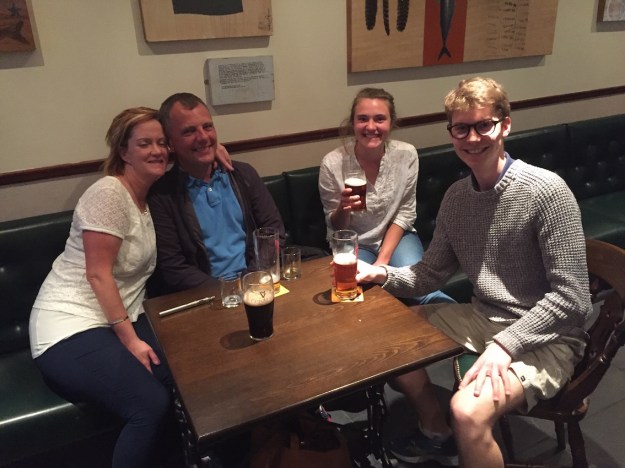
England were playing Slovakia in the European cup so while Ros returned to Milo, I went to the Marine Hotel bar to watch the football. This turned out to be quite a social experience, meeting Alan and Joanna Stewart from Glasgow and Dougle and Sophie from Dumfies and Cardiff respectively. The football was not terrible exciting, but the conversations more than made up for it.

IMG_1738 Joanna, Alan, Sophie and Dougle in the Marine Hotel having a natter after the football


Loch Moidart to Arisaig via Eigg

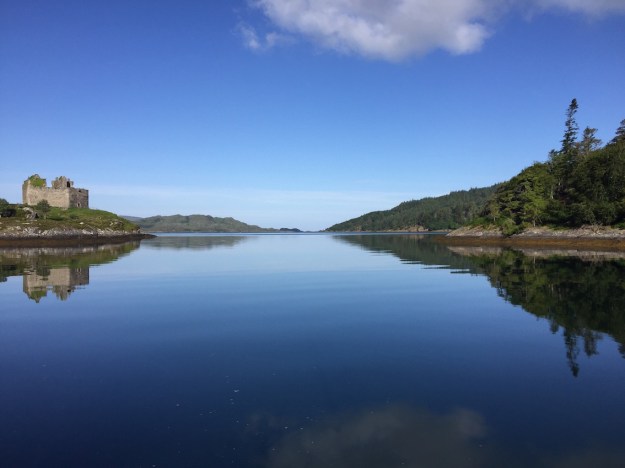
After the high winds of the day before, waking up in such a peaceful anchorage was delightful. Mirror images in every direction. I rowed to the shore and climbed to the castle wall to sit there for half an hour absorbing the beauty of the scene before me. Rowing back to Milo there were two herons on the shore of Riska Island (on the right of the photo below). IMG_1630

After both having dips from the back of the boat, we left for Eigg distinguished by its harpoon shape with the peaks of Rhum giving it a mountainous background and making it look bigger than it really is.

SONY DSCApproach Eigg with Rhum in the background

The scenery of the Inner Hebrides is dominated by four ancient volcanoes on the SW corner of Mull, the headland of Ardnamurchan, the Isle of Rhum and the SW of the Isle of Skye, shown in orange on the map below. The areas in grey are the fields of lava which flowed from these volcanoes. The Isles of Eigg and Muck have been formed from these lava flows.

IMG_1646

On arrival at Eigg we anchored south of the harbour and took the tender with the outboard to the pier. There’s no town  on Eigg – just a landing stage and a café, craft shop and general store rolled into one. There are clearly many lovely walks on the island – we did part of the shorebased one called Kildonan which gave beautiful views of the drying out harbour and the Oystercatchers taking advantage of it and a Puffer being restored. Even the sheep were sunbathing on the beach!

IMG_1648 Anchored south of Eigg harbour

SONY DSCSheep sunbathing on the beach

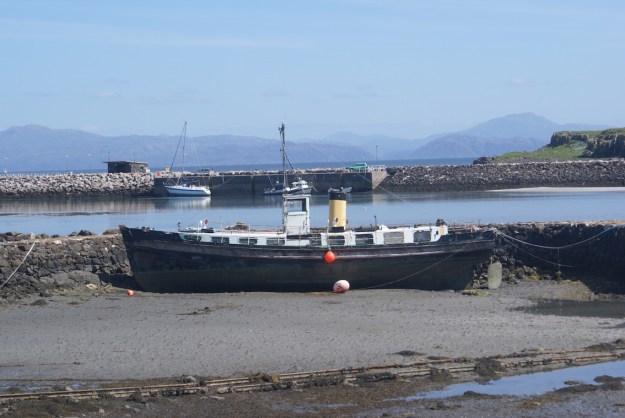
SONY DSCA Puffer being restored in the harbour.

As we left Eigg for Arisaig, we could see the impending weather change behind us. The entrance to Arisaig through Loch nan Ceall is described in the Pilots’ guide as one of the most hazardous in Scotland, yet we found the entrance quite clearly marked by poles although at high tide it was quite difficult to spot them – having a good chart plotter really helped.

IMG_1656 Leaving Eigg with Muck in the background and the sky signalling the impending change of weather
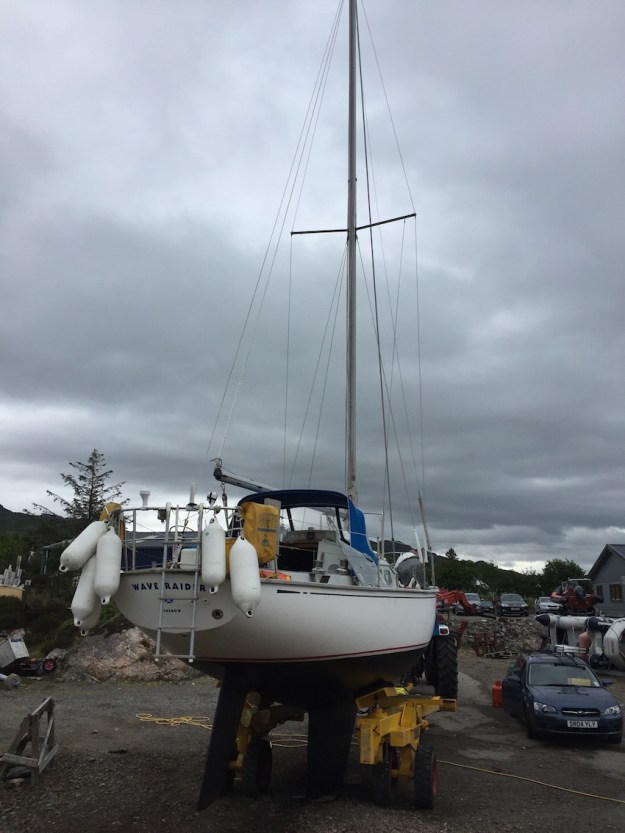
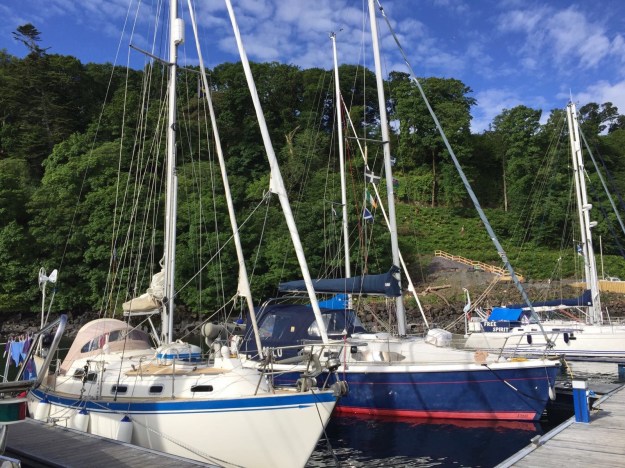
We picked up a mooring at Arisaig. But the scant resources there and the casualness of the staff convinced us that we should move on to Mallaig as the prospect of two days bad weather floating on a mooring with nowhere to go was not good. One highlight the next morning was bumping into John Howard from Tobermory (who replaced our autopilot), who was working on his boat Waver Raider.

IMG_1666 John Howard’s boat, Wave Raider, 2 years being renovated ready to go in the water the next day
Tobermory to Loch Moidart

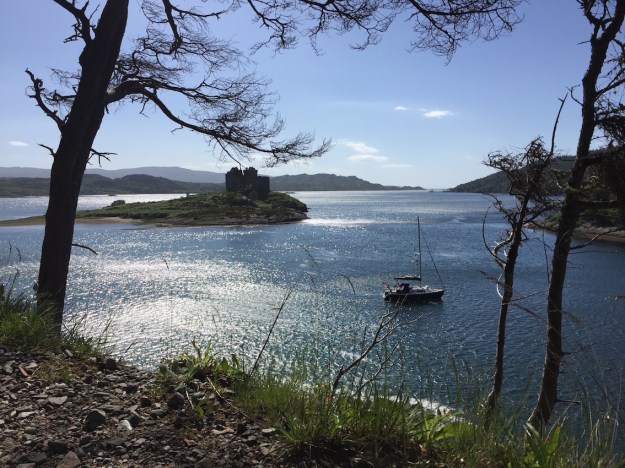
Sitting now in the sunshine at anchor in Loch Moidart overlooking a 13th century castle, delicately poised on top of a peninsular which is cut off by the tide, it is easy to forget the days getting the boat repaired in Tobermory and the previous day battling head into wind against choppy seas in a force 5 gusting 6 round Ardnamurchan and both feeling queasy. We’d been relying on the forecast in Tobermory, which is not a good idea when travelling north – the Minch inshore forecast was far worse. So today (Friday 17th June) we had a day off from sailing , arranging to walk around Loch Moidart, but more on that later.

I returned to Milo on its mooring in Tobermory on Monday 13th June to check out the new Autopilot system that had just been fitted. Unfortunately it did not work  – as soon as you engaged the autopilot the wheel swung continuously to port and moving Milo to the pontoon I noticed the rev counter did not work either . The prospect of sailing in circles was not appealing so I contacted John Howard the local Tobermory Marine Electrician, but sadly he was away and could not get to our boat until Wednesday morning. It is frustrating to be stuck in port when the weather is fair and you want to be sailing – but there were a number of distractions. First, on my arrival I was invited by Laurie and Georgie Wilson for a drink and a meal aboard Siskin, a lovely 27ft Vancouver, beautifully shaped outside and decorous woodwork inside. Like us Laurie had sailed up from the English South coast (Newton Ferrers in his case) and had now arrived in Tobermory

IMG_1583

Rosamund arrived midday Tuesday after an early start from Bristol. We had a great meal at the renowned Fish Café in the evening – at least I enjoyed my smoked haddock stuffed with Queenies (miniature scallops) but Ros was not so pleased with her halibut.

John arrived the next day and very quickly sorted out the problems with the rev counter and the autopilot. The former was just a lead displaced, the latter the fact that the tiller sensor from the old system was not compatible with the new “Evolution” system. Once removed everything worked beautifully.

We set off from Tobermory on full sail, as we were expecting force 4 and were surprised that the seas were so rough and, round Ardnamurchan, so “slappy” (where the boat lifts out of the water and crashes down with a loud slap). We were healing so far to port that all the plates came crashing out of their hold and landed across the cabin on the floor.

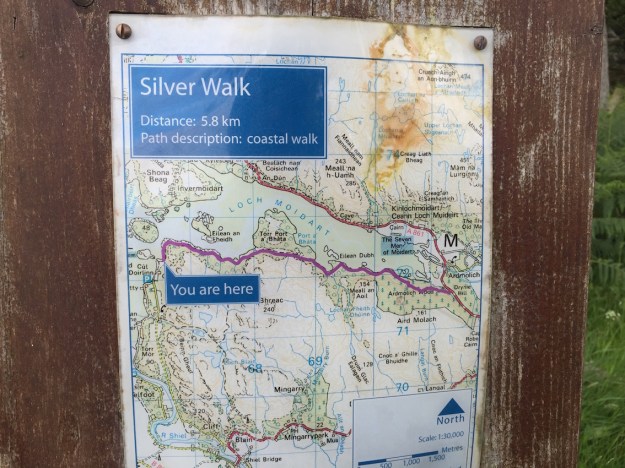
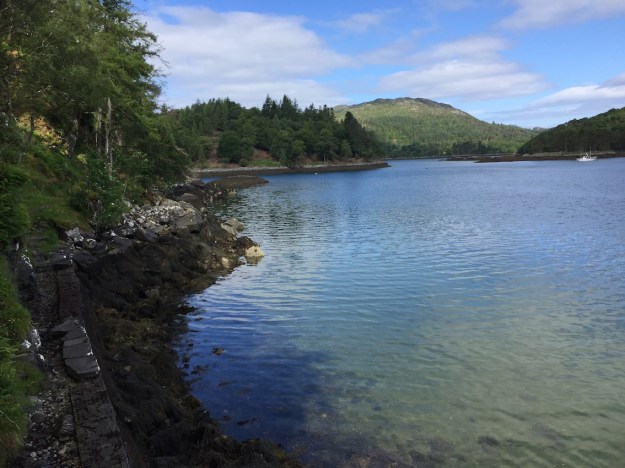
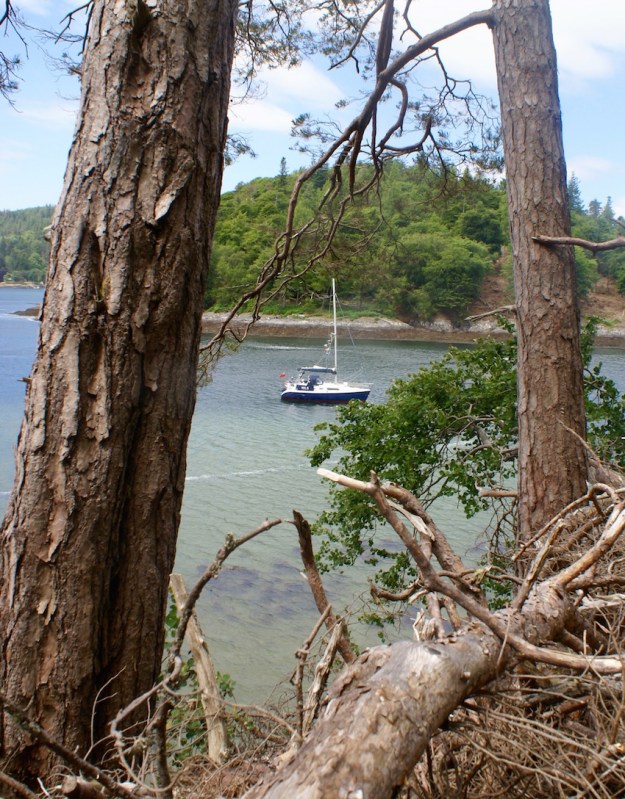
It was not until we were in the shelter of Loch Moidart that we realised those 18 and 24 knot winds were force 5 gusting 6 — our Tobermory forecast had been a little light weight. After anchoring behind the Isle of Riska in Loch Moidart we decided to be more cautious the next day and radioed Stornaway Coastguard (we had no mobile phone connection on either of our phones), who forecast force 5 gusting 6 and sea states moderate to rough, so we decided to have a day off and walk round Loch Moidart. There was something magical about this walk. It was called the “Silver Walk” – not sure if this was a walk for the Silver Brigade, but a lot of care had gone into carving the walk into the cliff side – there were steps at appropriate places made from natural rock, there were drainage gulleys to stop the path flooding and becoming boggy, there were fallen trees that were left where they fell but had been cut to allow a path through and there were an abundance of wild flowers and mosses. The lakeside views were stunning and we had a unique view of Milo on her mooring from above.

SONY DSC

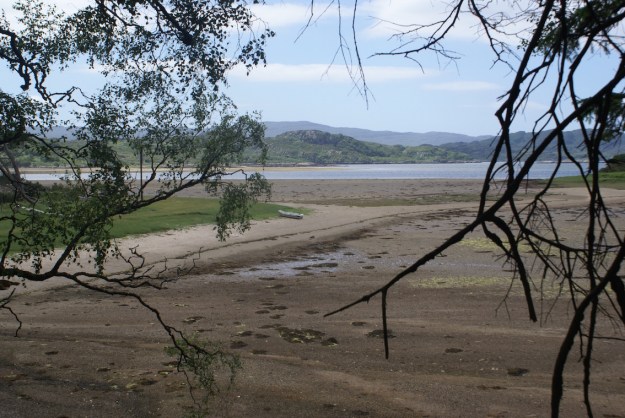
The Silver Walk is 5.8 km but we only did half of it, as there are two sections of the lake divided by a large promontory. It is not only that the views were stunning, but the same view at different times of the day and tide yielded such different panoramas.

The following pictures show some scenes from our walk which I hope hints at why we stayed at Loch Miodart for two nights and will one day return to stay longer.

IMG_1600

SONY DSC

IMG_1614

SONY DSC

SONY DSC

IMG_1626