
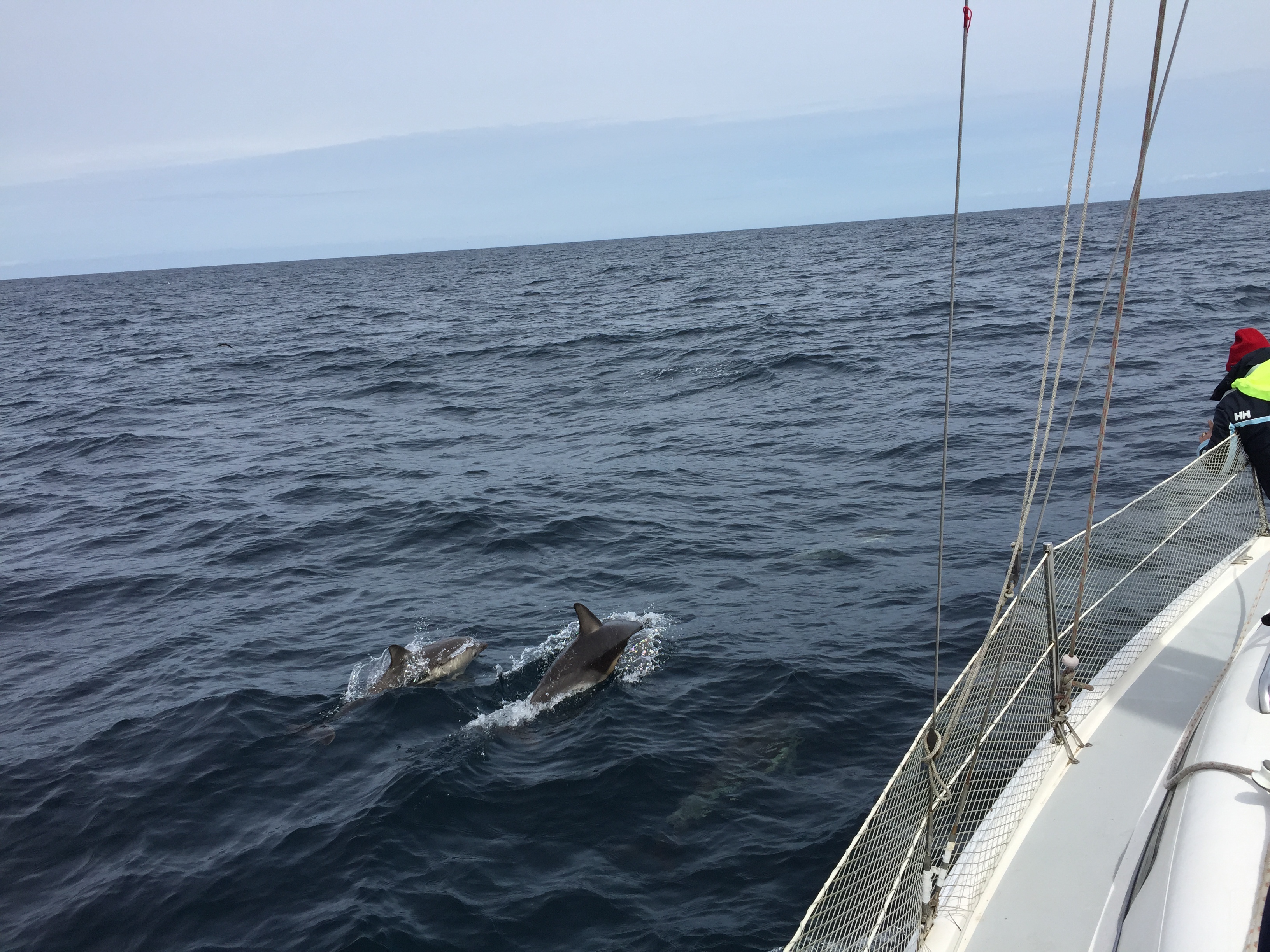
Milo must have a beautiful bottom. Admittedly she has been recently painted with a blue-grey under belly by Amanda Wright but clearly the dolphins love it because they came back to the boat again today, not once, not twice but three times. Again they grouped in threes or fours under the bow of the boat and in the picture below I saw at least five grouped to the right. How many were to the left I don’t know.
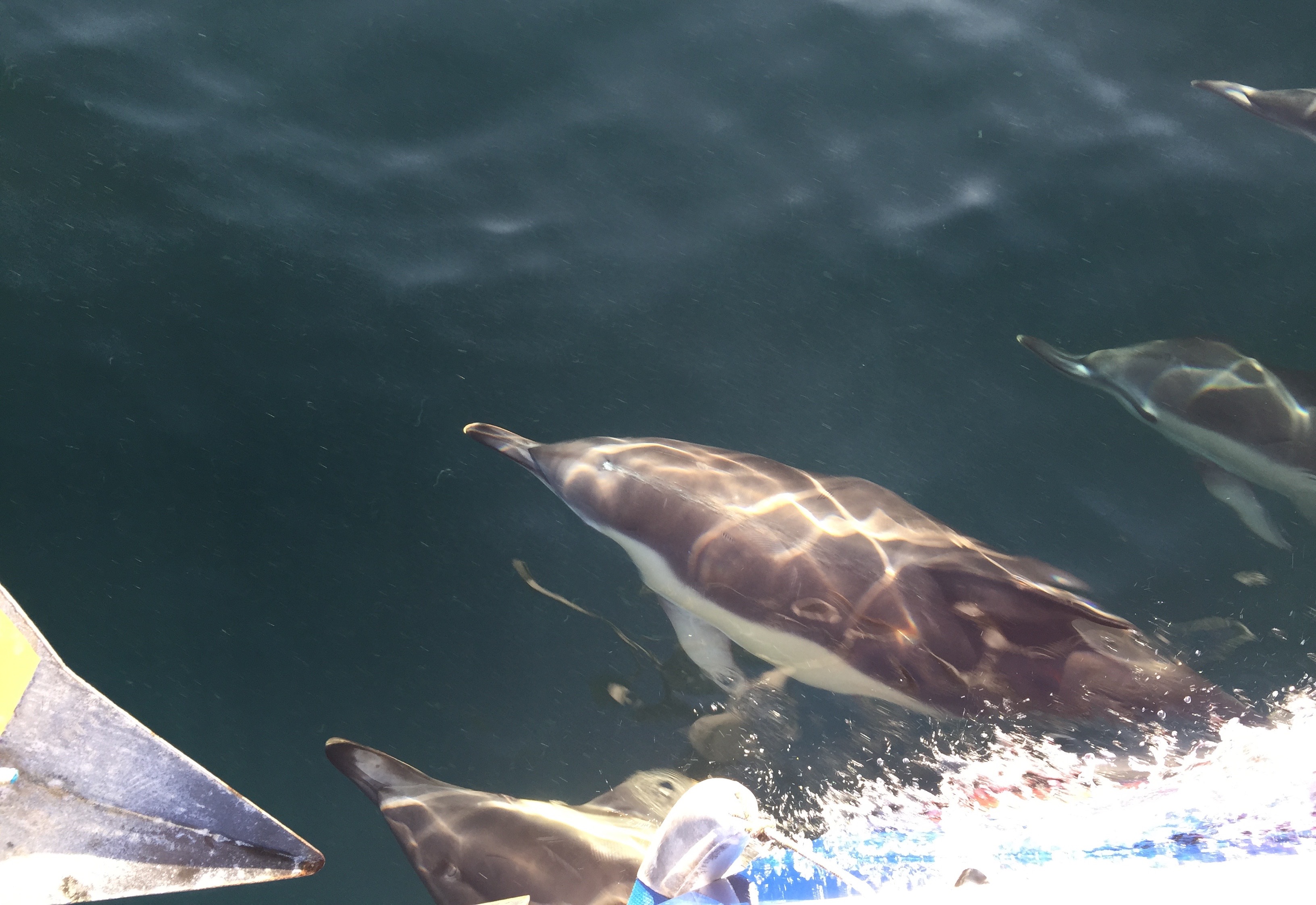
I went up to the pulpit and was there for ages taking videos and pictures. I was convinced they were surfacing close to my feet to communicate with me. You could hear their high pitched squealing noise.
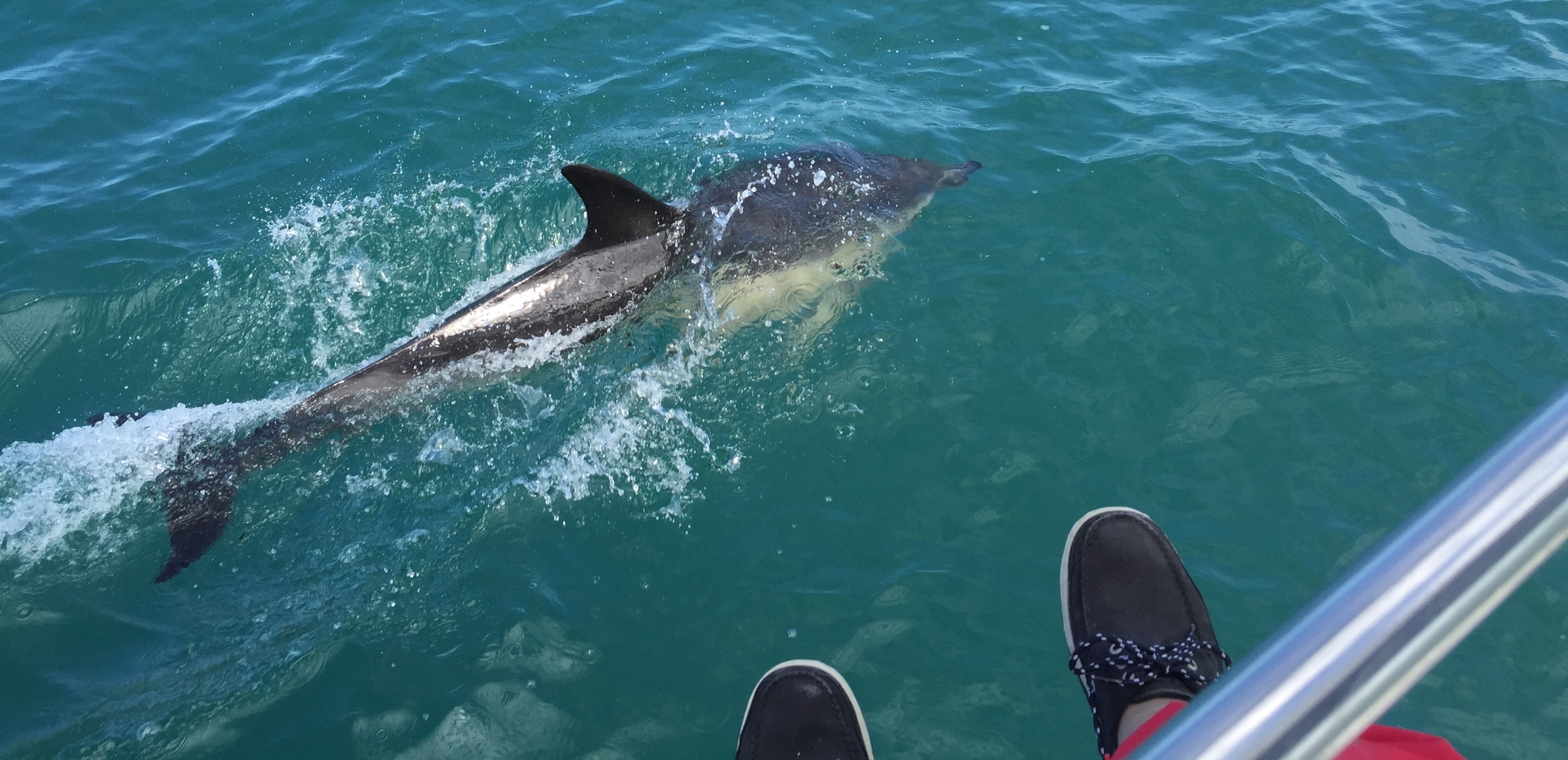
It was easier to capture their playful nature with video than with still photography. I eventually began to recognise when they were surface for air. They swam up to the surface and jumped in a shallow parabolic arch to breath through their blow hole but also look you in the eye.
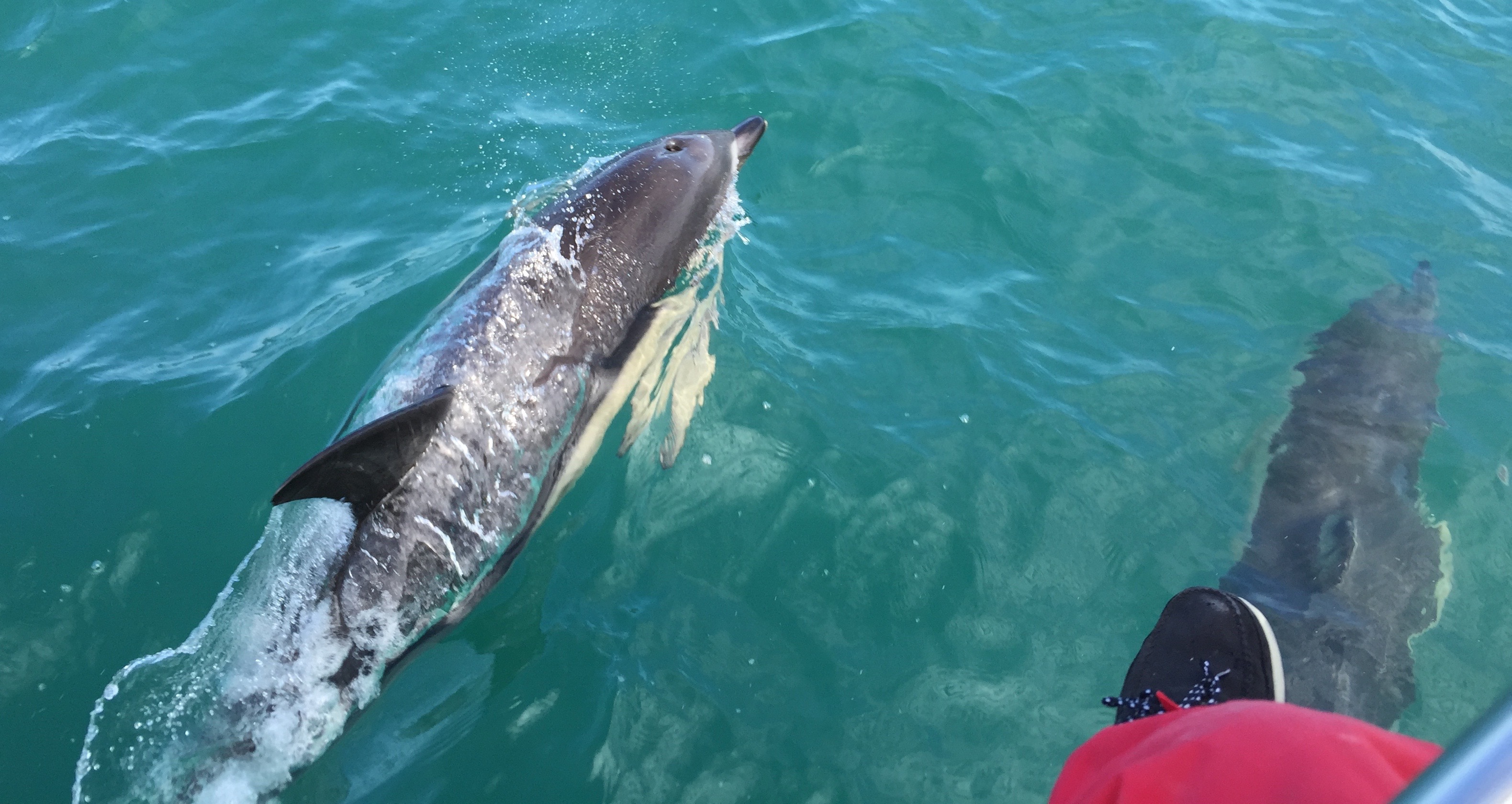
I had devised a theory that they were attracted to the wake that the propeller makes, as it was very aerated. Also, because we were motor sailing, we were doing at least 6 knots which was a speed they could race against. However, on the second occasion they joined us we were sailing and only going about 3.4 knots. This time they stayed with us for much longer – not just in the bow wake of the boat, but also criss-crossing around and across the boat – also wizzing forward and turning to race back – jumping along the way. We later learned from a seasoned sailor that they like surfing on the bow wave of a boat.
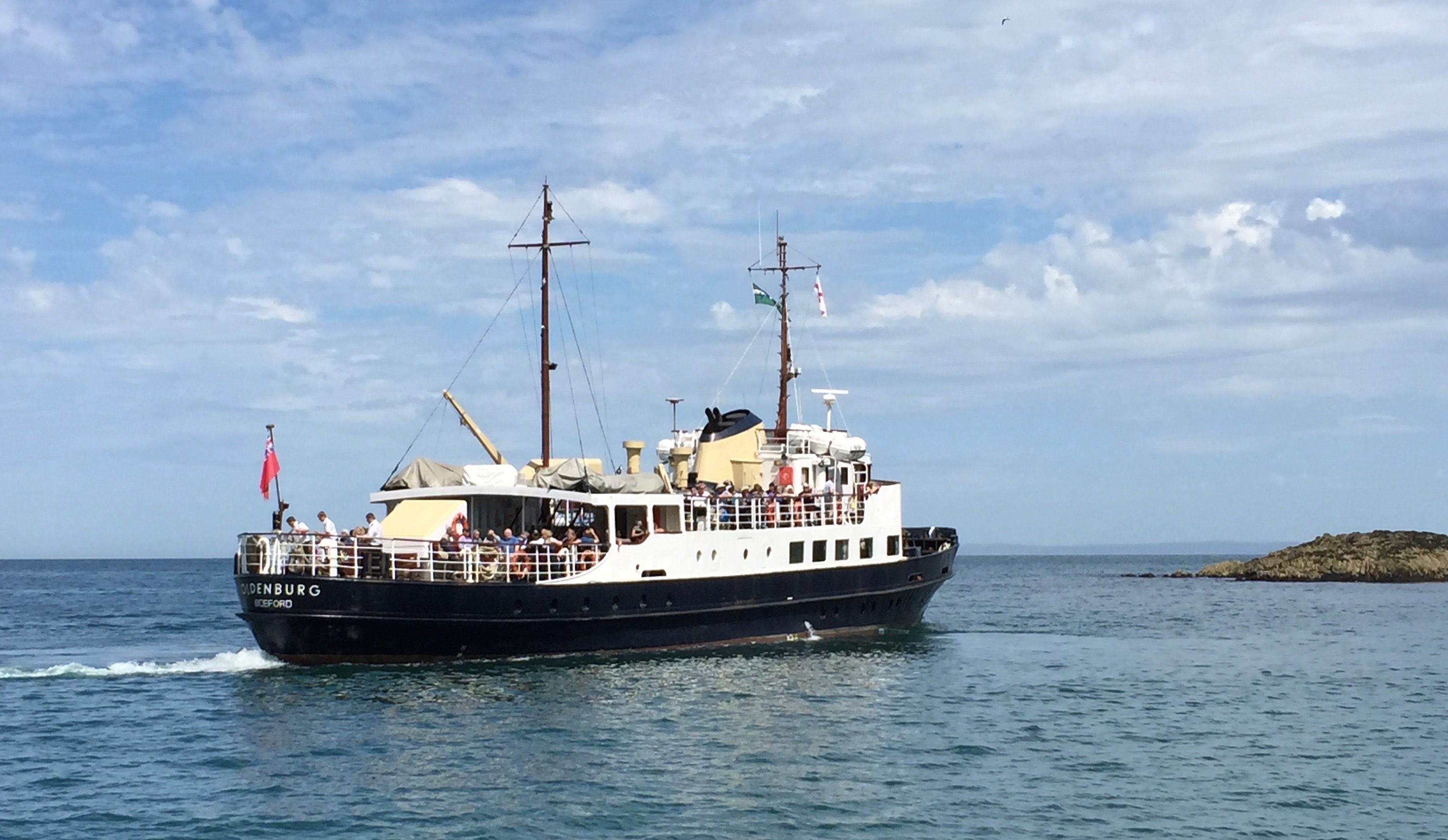
Finally we arrived at the island of Lundy in the early afternoon just in time to see the Lundy ferry Oldenberg leave.
 We anchored and took bearings of three landmarks to fix our position and motored the dinghy ashore. I asked a young woman who was filling Oxygen bottles in an old hut on the shore if I could borrow one of their old ropes to tie up the dinghy. Its normal mooring wharf was too short for the spring tides which I’d estimated would rise another 5m while we took the walk to the pub. It turned out she was the local warden and the ropes lying there were ones that had washed up on the shoreline. We left Milo moored in the bay and started the long winding walk up to the small village at the top passing a very interesting manor house along the way, which we later learned was Millcombe House administered by the Landmark Trust (http://www.landmarktrust.org.uk/search-and-book/properties/millcombe-house-13591).
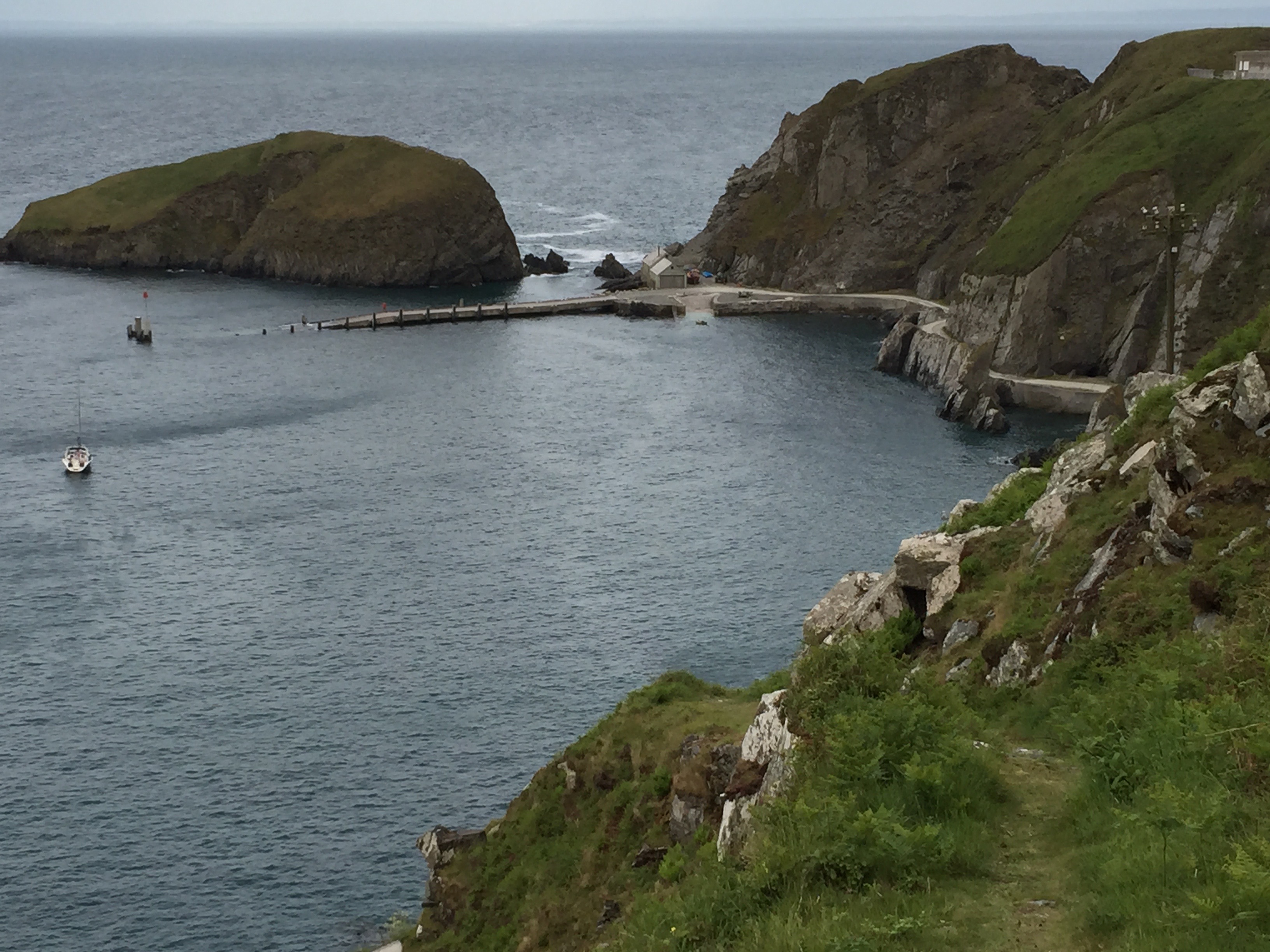
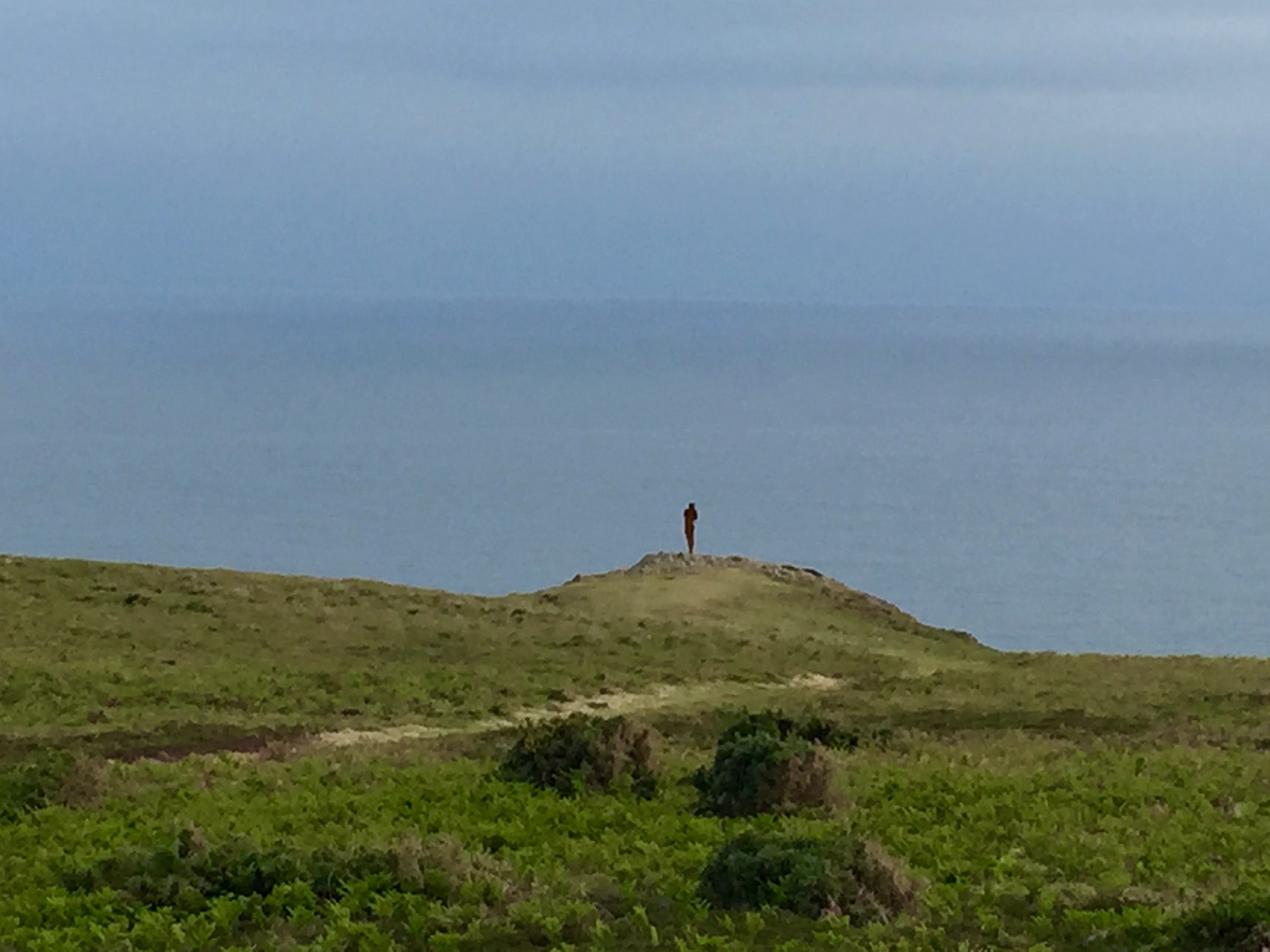
We ate at the Marisco Tavern and studied the chart of shipwrecks on the wall by the bar – a sobering moment when we thought that the next morning we’d have to navigate through the overfalls at the NE end of the island. After a visit to the church which doubled as a geological museum, we went for a short walk to see the Antony Gormley sculpture on the distant southern shoreline before we started our descent to the bay by a different route and our return to Milo
 In fact when we eventually got back to the boat that evening, the wind had been blowing from the NE for a while and there was a swell in the bay making Milo rock and roll. It was much worse than being at sea in a gale. At least at sea the wind keeps the boat listed one way and you pitch through the waves. Here it was pitching both ways, which was nauseating – literally. We were worried our anchor would drag and leave us blown against the rocks in the night, so I set out a back up kedge anchor just in case and arranged for Ros and I to have 3 hourly watches each throughout the night. I took the first watch and kept taking bearings of my landmarks. The spring tide came up remarkably high rising 7.2 metres and covered the landing stage.
As our anchor was only 20m long and I’d anchored at low tide in 2m – I only had a ratio of 2:1 of length to depth – normally it is recommended to have 3:1. I was in the middle of these complicated calculations as something to do on my watch, when I suddenly realised I had technology on board to fix my position within +5m – my GPS. I switched it on, waited for a while for it to find enough satellites and, hey-presto, a fix. It was within metres of where I’d first moored – why was I worrying? It was near the end of my watch but I decided, after padding the crockery with matting to stop it rattling around, not to wake Ros for her watch, got ready for bed and slept really soundly until 6am. We woke to sunshine in an idyllic spot, but somehow the traumas of the night had brought a more sinister aspect and it had lost some of its romance, so it was agreed “to get the hell out of here”.
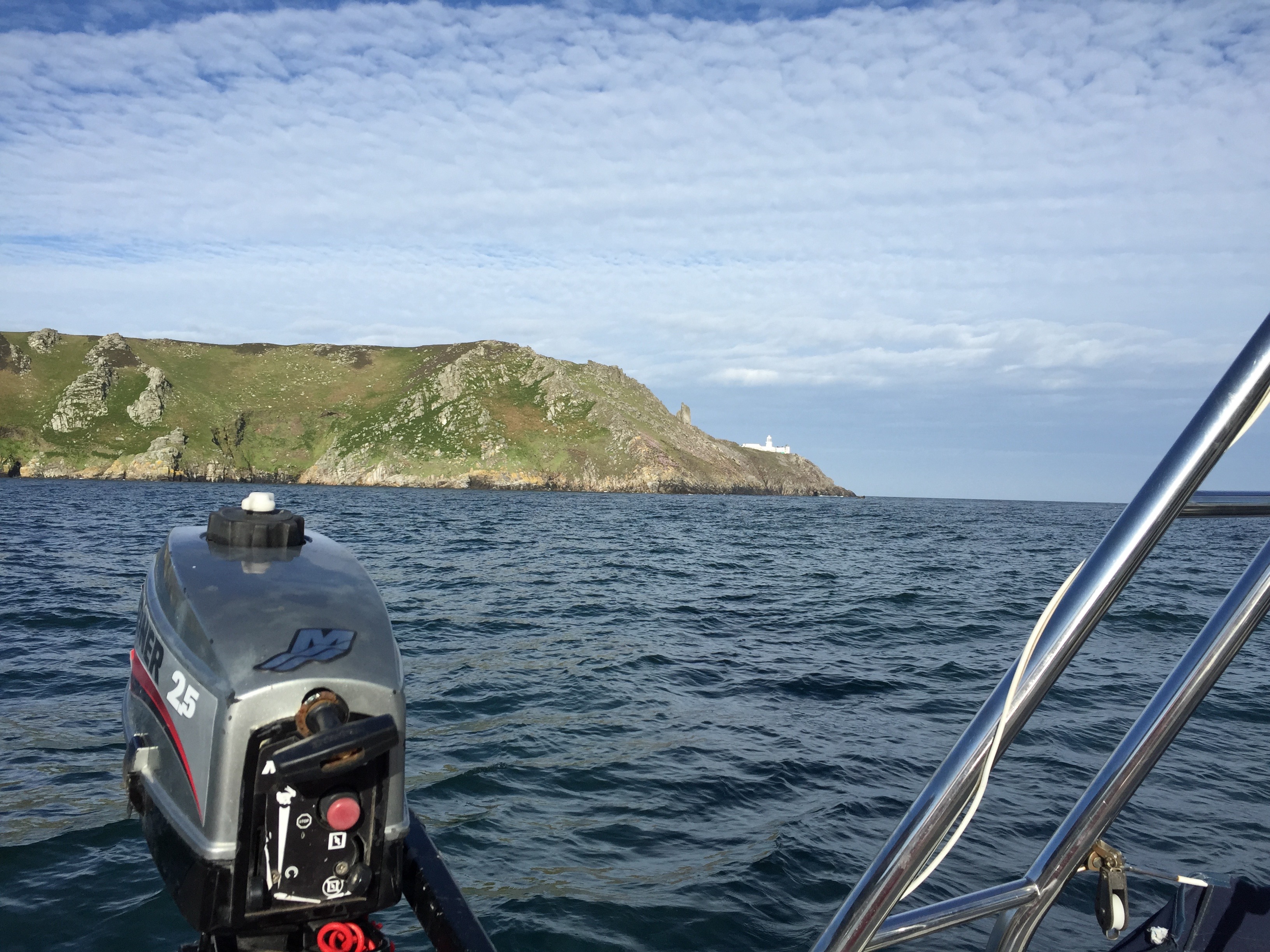


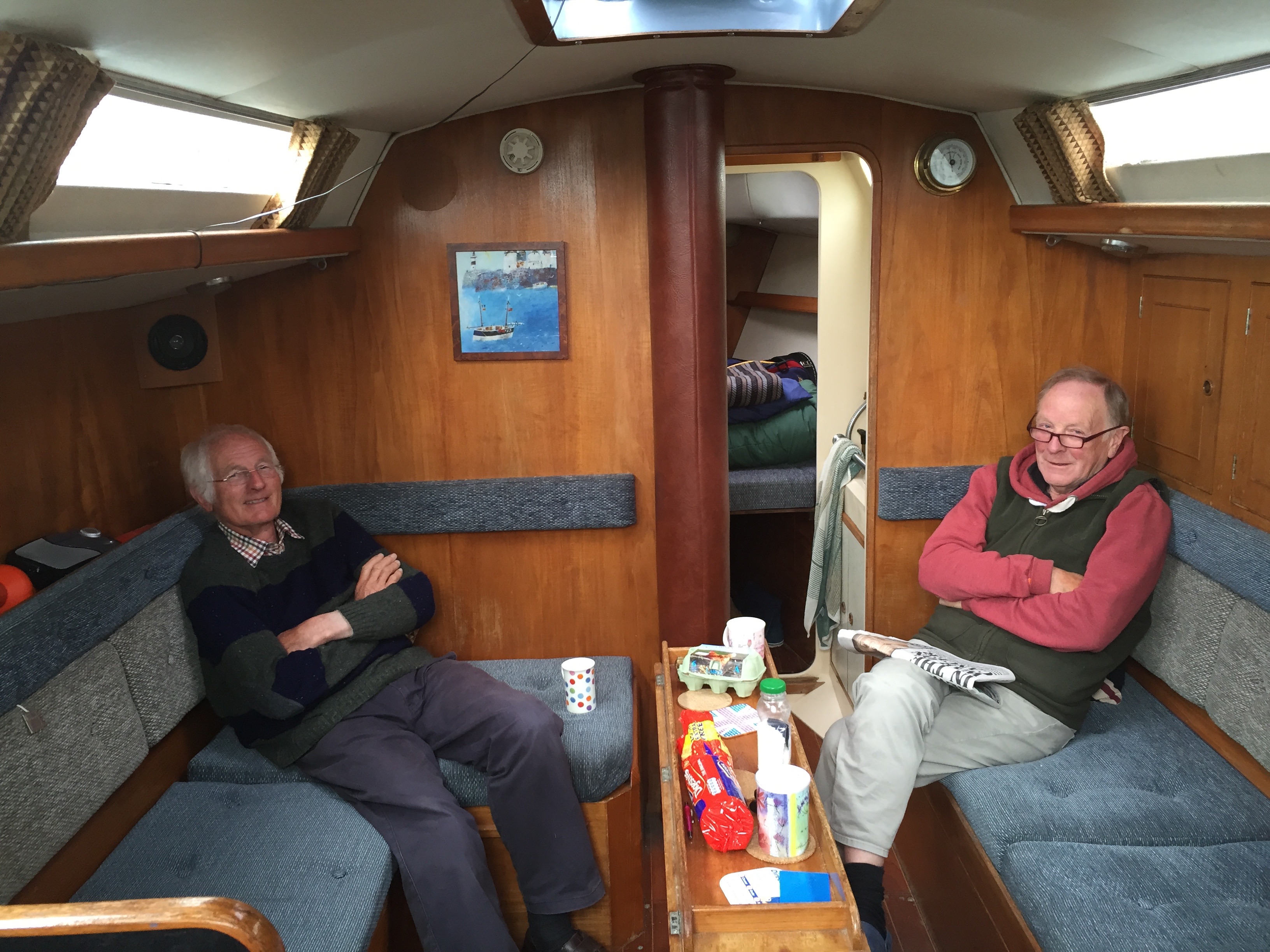
 g to be rescued and the collision did not just pitch him into the water, but also injured him quite badly. He ultimately had to be airlifted by helicopter to hospital (Geoff was full of praise for the helicopter crew) but was furious two years later when he saw the blue plaque on the north harbour wall bearing the entry, “2007, 25 JUN YACHT FLY ONE LIFE SAVED’. “The cheek of it” he said, “I was coping, I didn’t want to be rescued, they insisted and then nearly killed me!!” Sadly as he had not finished securing the anchor properly, the yacht drifted onto the rocks in the night and was an insurance write-off. It was after this that he saw the Nicholson in very poor state in Glasgow, bought it and has reconditioned it to its proud state today. As an ex-aeronautics engineer, Geoff just loves the free ride that you get with sailing – using aerofoil technology to get you to where you want to go. Prior to the incident in Padstow estuary, Geoff had sailed Fly solo non-stop from the Azores on one single tack for 8 days covering 1200nm – using a self made wind vane steerage control system.



 milosails